Today's activity reinforces a hardening reality: traditional perimeters are dead, human process is an open door, and geopolitical tensions are shaping the contours of the threat landscape as much as code vulnerabilities. Threat actors are blending exploit kits with timing, disinformation, and regulatory evasion. The result: every business now operates in an adversarial environment—some just haven't updated their threat models yet.
NGOs Under Siege: APT42 Deploys Tailored Implants
APT42, an Iranian state-aligned actor, is deploying two new backdoors against NGOs and IGOs. The malware appears customized for long-dwell reconnaissance and data exfiltration tied to email and cloud identity layers.
This isn't a volume play. This is intelligence-grade targeting of influence ecosystems. Human rights groups, intergovernmental bodies, and policy NGOs should now consider themselves top-tier cyber targets not collateral damage.
Retail Security Compromised via Help Desk Deception
UK retailers Marks & Spencer and Co-op were breached via impersonation-based help desk compromise. No malware, no exploit just phone and procedural abuse. Access was granted, credentials reset, networks opened.
Attackers are treating enterprise support teams like soft-core intrusion tools. And in sectors like retail, where customer loyalty and payment ecosystems intersect, the trust cost compounds fast.
IoT Weaponization: Mirai's New Lifecycle
Updated Mirai variants are actively compromising Samsung MagicINFO and GeoVision IoT devices. These are not opportunistic pings they're part of a botnet seeding campaign targeting under-managed enterprise signage, access control, and camera systems.
Legacy IoT devices are being stockpiled for future operational use not just DDoS. Expect them to support broader kill chains involving lateral movement, surveillance, or staging.
Zero-Day Persistence: SAP and Apache Under Repeat Fire
Actors are reactivating access via SAP NetWeaver webshells placed during the prior zero-day wave. Simultaneously, Apache Parquet's CVE-2025-30065 exploit has gone from CVE to active PoC with growing scanning activity across analytics infrastructure.
The old paradigm patch and move on doesn't apply. Threat actors are returning to known-access environments, especially in data-heavy systems without runtime telemetry.
Langflow, DeepSeek, and the Weaponization of AI Logic
Langflow is now confirmed under active exploitation for code injection risks. Separately, DeepSeek R1 shows complete vulnerability to prompt injection every adversarial attempt tested succeeded in overriding task parameters.
AI workflows are now being treated as vulnerable pipelines. In environments where employees are using LLMs unsupervised, prompt injection isn't just theoretical it's breach facilitation.
Microsoft 365 Outage: Reminder of SaaS Fragility
Microsoft Teams and related services suffered broad disruption across North America. No attack is confirmed, but the incident underscores a growing theme: SaaS service concentration is a single point of operational failure for most enterprises.
Uptime is not security. Dependency maps must account for collaboration stack fragility especially during concurrent adversary activity.
Geopolitical Exposure: Cyber Risks Now Mirror Foreign Policy
Ukraine Russia: Hybrid Conflict at Scale
Ukraine's drone campaign near Moscow triggered the shutdown of major Russian airports. Within hours, threat intel feeds showed renewed scanning of Eastern European and NATO-aligned industrial control systems. Cyber retaliation is expected and likely already in play.
Middle East: Israel Signals Total Occupation Intent
Israeli leadership has authorized expanded operations in Gaza. Regional actors, particularly Iranian proxies, will view this as justification for both kinetic and cyber reprisals potentially through fronts like APT33 and APT42.
New Zealand Sounds the Alarm
The Reserve Bank of New Zealand has formally warned that global tariffs imposed by the U.S. have increased financial cyber risk. Expect threat actors to exploit central bank dependency on aging SWIFT infrastructure and national fintech stacks.
UK EU Defense Realignment
The UK is lobbying for entry into the €150B EU defense fund. That posture is likely to raise its profile among cyber actors interested in disrupting joint procurement, arms logistics, and funding flows. Threats targeting UK and EU government contractors should be considered elevated for the next 90 days.
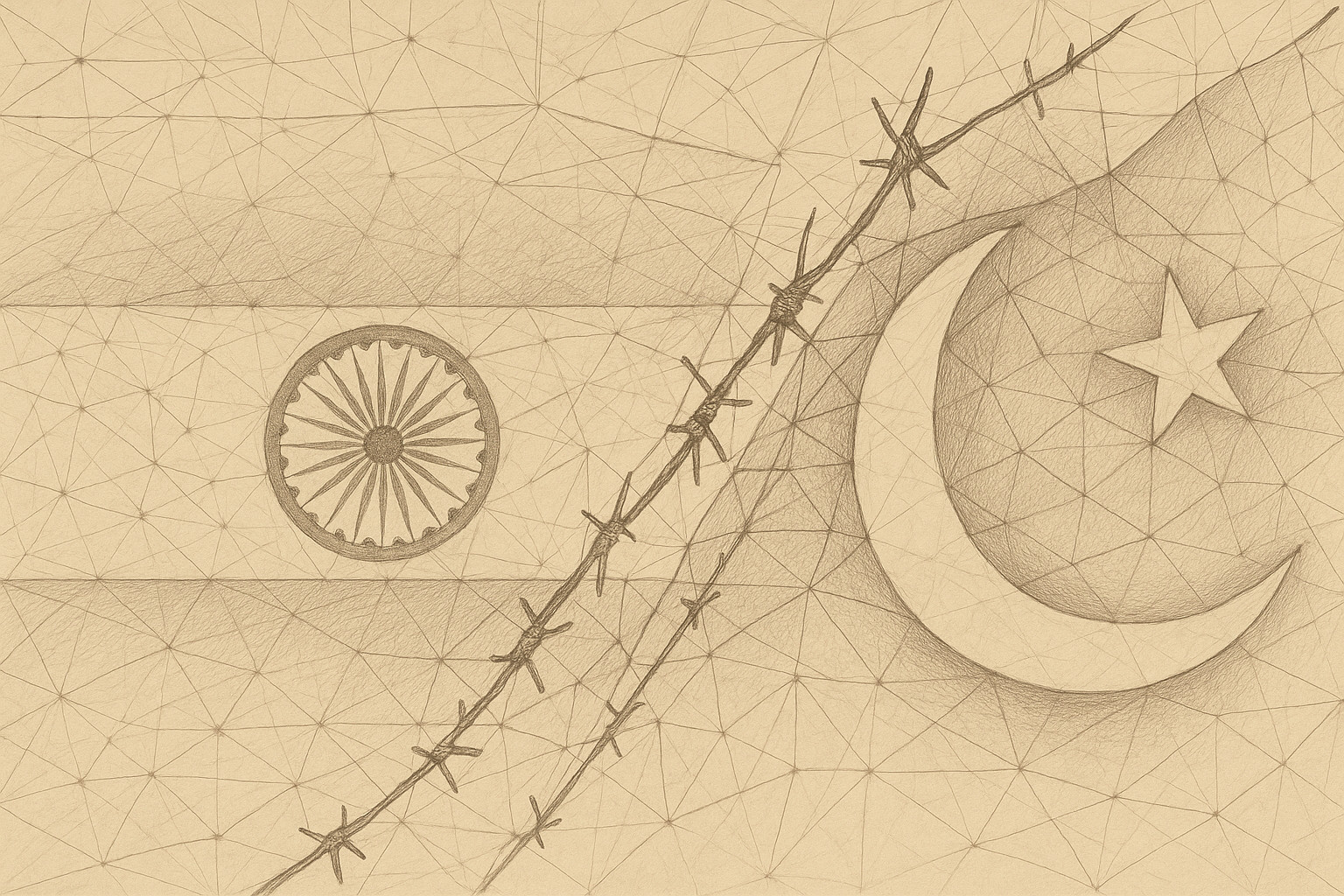
India Pakistan: Kinetic Escalation Elevates Cyber Threat Profile
Following today's confirmed kinetic strike by India against Pakistani targets, the cyber threat environment in South Asia has shifted from high-risk to active conflict zone. Historically, physical escalation between these two nuclear-armed states has triggered parallel cyber offensives—often targeting financial institutions, government portals, media outlets, and energy infrastructure.
Both countries have previously engaged in tit-for-tat cyber operations via state-aligned threat groups such as India's SideWinder and Pakistan's Transparent Tribe. With real-world conflict now underway, the likelihood of widespread cyber retaliation, disinformation campaigns, and regional spillover into third-party systems is significant.
CISO Action Plan - May 6, 2025
Identity and Human Access
- Enforce dual-party approval for password resets and privileged support workflows.
- Apply adaptive MFA and session risk scoring to all federation-based logins.
- Conduct phishing simulation exercises specifically targeting help desk and IT support staff.
Infrastructure and Exploit Surface Reduction
- Scan for unpatched SAP NetWeaver and Apache Parquet instances. Conduct IOC sweeps for known webshell signatures.
- Immediately segment and isolate IoT systems vulnerable to Samsung and GeoVision CVEs.
- Disable WAN-side management interfaces on legacy infrastructure appliances.
AI Usage and Prompt Injection Defense
- Block unauthorized generative AI platforms (e.g., DeepSeek) at the network perimeter.
- Monitor outbound LLM interaction logs for anomalous prompt activity or unsanctioned file access.
- Require AI usage policy registration and sandboxed deployment for any Langflow or similar low-code AI frameworks.
Third-Party and Geopolitical Risk Posture
- Flag NGO, policy, and legal tech vendors for enhanced TPRM monitoring.
- Increase scrutiny of vendors with exposure to EU defense contracts, Israeli supply chains, or New Zealand central bank operations.
- Reassess exposure to energy, legal, and financial systems vulnerable to retaliatory cyberattacks from Russia and Iran.
- Immediately revalidate threat models for any infrastructure connected to South Asian data centers, telecom, logistics, or finance.
- Increase monitoring for phishing, DNS tampering, and defacements targeting Indian or Pakistani entities and their affiliates.
- Treat regional service providers and MSPs as high-risk for lateral exposure.
- Consider isolation of non-essential links to partners operating in the region until further clarity on cyber retaliation surfaces.
SaaS Dependency Contingency Planning
- Document and rank SaaS dependencies by operational criticality.
- Establish offline workflows for collaboration platforms including Microsoft 365.
- Initiate tabletop exercises simulating concurrent SaaS outage + adversarial exploitation scenarios.
Closing Note
The adversaries aren't just evolving technically they're aligning tactically with global conflict. Every business is now a participant in geopolitical dynamics, whether they acknowledge it or not. The most dangerous posture is strategic apathy.
Preparation is no longer a project. It's a posture. Maintain it. Refine it. Or be overrun by those who already have.